
Monday, April 11, 2016
Africa is the Continent of now, says Mme Zuma of the AUC
By ClimDev-Africa Africa is not only the continent of the future, but mostly the continent of now, Madame Nkosazana Dlamini-Zuma President of the Commission of the African Union told thousands of participants at the inaugural ceremony of the Africa Pavilion at the ongoing climate talks in Paris.
Underscoring the increasing role that Africa now plays in seeking solutions to global impacts of climate change, Madame. Zuma called on Africans present at COP 21 to “prove that we are here, we are present, and we are ready to demonstrate that we can help through substantive contributions towards viable solutions to problems facing humanity, especially those posed by climate change.”
“Africa’s contribution are not limited to the COP 21 negotiations but will go far beyond," she said, calling on African negotiators to do their best to defend the Continent’s positions in all the negotiation streams.
She thanked the partners in the ClimDev initiative who teamed up with the African Union Commission to set up an Africa Pavilion at COP 21 - United Nations Economic Commission for Africa, the African Development Bank (AfDB) and the NEPAD Agency.
A Special Thank You message was reserved for President Boni Yayi of Benin, whose government provided financial support for the pavilion, calling on other governments to follow the example and show that Africa is ready to solve its own problems.
Thanks to the pavilion which is hosting hundreds of events to raise awareness of the challenges facing Africa, African leadership the unwritten message of it is that Africa is forging its way, despite a myriad of challenges to address its own problems.
She called on those working in the pavilion to make it as dynamic as possible. The Africa Pavilion at COP21 is aimed, among other things, at providing a forum for discussions and debates on climate change issues relevant to Africa, in the broader context of sustainable development.
It is conceived as a platform to enhance critical reflections on the relationship between the available information and knowledge, technical services and policy directions on climate change in Africa.
It will create opportunities for knowledge-sharing between policy makers and practitioners, the scientific community and the negotiators on the implications of climate change for the inclusive growth agenda, especially focusing on the interactions between the climate change and vulnerabilities.
The African Pavilion will also help to identify opportunities of climate change for Africa. It will catalyze the identification of the climate policies, practices from the recommendations from research, and promote quality scientific research.
An important event at the Pavilion will be the Africa Day event at which the Executive Secretary of ECA, Mr. Carlos Lopes; the President of the African Development Bank and the CEO of the NEPAD Planning Agency will discuss priority issues with participants in the event.
Africa is not only the continent of the future, but mostly the continent of now, Madame Nkosazana Dlamini-Zuma President of the Commission of the African Union told thousands of participants at the inaugural ceremony of the Africa Pavilion at the ongoing climate talks in Paris.
Underscoring the increasing role that Africa now plays in seeking solutions to global impacts of climate change, Madame. Zuma called on Africans present at COP 21 to “prove that we are here, we are present, and we are ready to demonstrate that we can help through substantive contributions towards viable solutions to problems facing humanity, especially those posed by climate change.”
“Africa’s contribution are not limited to the COP 21 negotiations but will go far beyond," she said, calling on African negotiators to do their best to defend the Continent’s positions in all the negotiation streams.
She thanked the partners in the ClimDev initiative who teamed up with the African Union Commission to set up an Africa Pavilion at COP 21 - United Nations Economic Commission for Africa, the African Development Bank (AfDB) and the NEPAD Agency.
A Special Thank You message was reserved for President Boni Yayi of Benin, whose government provided financial support for the pavilion, calling on other governments to follow the example and show that Africa is ready to solve its own problems.
Thanks to the pavilion which is hosting hundreds of events to raise awareness of the challenges facing Africa, African leadership the unwritten message of it is that Africa is forging its way, despite a myriad of challenges to address its own problems.
She called on those working in the pavilion to make it as dynamic as possible. The Africa Pavilion at COP21 is aimed, among other things, at providing a forum for discussions and debates on climate change issues relevant to Africa, in the broader context of sustainable development.
It is conceived as a platform to enhance critical reflections on the relationship between the available information and knowledge, technical services and policy directions on climate change in Africa.
It will create opportunities for knowledge-sharing between policy makers and practitioners, the scientific community and the negotiators on the implications of climate change for the inclusive growth agenda, especially focusing on the interactions between the climate change and vulnerabilities.
The African Pavilion will also help to identify opportunities of climate change for Africa. It will catalyze the identification of the climate policies, practices from the recommendations from research, and promote quality scientific research.
An important event at the Pavilion will be the Africa Day event at which the Executive Secretary of ECA, Mr. Carlos Lopes; the President of the African Development Bank and the CEO of the NEPAD Planning Agency will discuss priority issues with participants in the event.

Africa drives bold new narrative at COP21, asserts post-COP period will be key
By camlinknews Speaking in the aftermath of the landmark Paris conference, Ms. Denton commended Africa’s positive and tireless commitment throughout the entire negotiation process, successfully demonstrating its weight in the global climate negotiating arena.
“The significance of this COP was clear; this was the frontier COP, the COP of humanity. If an ambitious agreement was not achieved in Paris, the opportunity would have been missed.
“Africa came to these negotiations with determination and commitment, indicating that it is far more than just an observer. We reminded the world that as fifty-four countries, Africa is a considerable force – and, without the buy-in of these countries, there would have been no global agreement. At COP21, Africa laid out a clear set of issues and left the conference with a real sense of satisfaction, having put these issues firmly on the table.”
However, according to Ms. Denton, the signing of the long-awaited climate deal remains only a step in the right direction – for Africa, the real challenge lies in implementation of the agreement in the post-COP period ahead.
“Many of the issues the continent brought to COP21 will not be resolved overnight. Much work remains to be done in terms of putting our ambitions and development objectives into practice – a big part of this will be seeing how we can finance these plans.”
Yet according to Denton, clear Intended Nationally Determined Contributions (INDC), setting out how African nations will tackle climate change – both in terms of reducing carbon emissions and in adapting to climate challenges – will serve the continent well as it pushes ahead with implementation.
“Africa’s INDCs, including specific proposals on how it intends to reduce greenhouse gas emissions, were the most ambitious of all. These proposals run alongside concrete plans of how the continent intends to drive forward its economy with the development of sectors such as energy, forestry and agriculture. With clear climate action plans that are carefully aligned with national development strategies, Africa has done much valuable work in charting the pathway going forward.”
Ms. Denton continued that submitting these ambitious national plans of action have contributed to a bold new narrative for the continent, emerging from the Paris negotiations. These plans, combined with the launch of two dynamic pan-African initiatives - the African Initiative on Adaptation and Loss and Damage, and the African Renewable Energy Initiative - have cemented the continent’s place as a front-runner in a new decarbonised world, and a thought-leader in developing innovative climate solutions.
“In Africa’s INDCs and the launch of these two initiatives, Africa set out some very clear and tangible proposals. With this, we have seen a clear shift in narrative, moving away from an old dialogue which saw Africa “asking” – be that for financial support or new technologies.
“With its own ambitious plans, Africa has demonstrated that it will not passively wait for things to happen. Instead, it has embraced a new determination and unity, showing the world that it is in control of its own development – and its own destiny,” Denton concluded.
Photo:Paris, France, 12 December 2015 – As the world celebrates the outcome of the COP21 climate negotiations, widely touted as an historic deal to transform the world's carbon economy and slow the rate of global warming, implementation of the new climate deal will be vital for Africa, says Fatima Denton, Director of the Special Initiatives Division and Coordinator of the African Climate Policy Centre (ACPC) at the UN Economic Commission for Africa (UNECA).
Speaking in the aftermath of the landmark Paris conference, Ms. Denton commended Africa’s positive and tireless commitment throughout the entire negotiation process, successfully demonstrating its weight in the global climate negotiating arena.
“The significance of this COP was clear; this was the frontier COP, the COP of humanity. If an ambitious agreement was not achieved in Paris, the opportunity would have been missed.
“Africa came to these negotiations with determination and commitment, indicating that it is far more than just an observer. We reminded the world that as fifty-four countries, Africa is a considerable force – and, without the buy-in of these countries, there would have been no global agreement. At COP21, Africa laid out a clear set of issues and left the conference with a real sense of satisfaction, having put these issues firmly on the table.”
However, according to Ms. Denton, the signing of the long-awaited climate deal remains only a step in the right direction – for Africa, the real challenge lies in implementation of the agreement in the post-COP period ahead.
“Many of the issues the continent brought to COP21 will not be resolved overnight. Much work remains to be done in terms of putting our ambitions and development objectives into practice – a big part of this will be seeing how we can finance these plans.”
Yet according to Denton, clear Intended Nationally Determined Contributions (INDC), setting out how African nations will tackle climate change – both in terms of reducing carbon emissions and in adapting to climate challenges – will serve the continent well as it pushes ahead with implementation.
“Africa’s INDCs, including specific proposals on how it intends to reduce greenhouse gas emissions, were the most ambitious of all. These proposals run alongside concrete plans of how the continent intends to drive forward its economy with the development of sectors such as energy, forestry and agriculture. With clear climate action plans that are carefully aligned with national development strategies, Africa has done much valuable work in charting the pathway going forward.”
Ms. Denton continued that submitting these ambitious national plans of action have contributed to a bold new narrative for the continent, emerging from the Paris negotiations. These plans, combined with the launch of two dynamic pan-African initiatives - the African Initiative on Adaptation and Loss and Damage, and the African Renewable Energy Initiative - have cemented the continent’s place as a front-runner in a new decarbonised world, and a thought-leader in developing innovative climate solutions.
“In Africa’s INDCs and the launch of these two initiatives, Africa set out some very clear and tangible proposals. With this, we have seen a clear shift in narrative, moving away from an old dialogue which saw Africa “asking” – be that for financial support or new technologies.
“With its own ambitious plans, Africa has demonstrated that it will not passively wait for things to happen. Instead, it has embraced a new determination and unity, showing the world that it is in control of its own development – and its own destiny,” Denton concluded.
Photo:Paris, France, 12 December 2015 – As the world celebrates the outcome of the COP21 climate negotiations, widely touted as an historic deal to transform the world's carbon economy and slow the rate of global warming, implementation of the new climate deal will be vital for Africa, says Fatima Denton, Director of the Special Initiatives Division and Coordinator of the African Climate Policy Centre (ACPC) at the UN Economic Commission for Africa (UNECA).

Advantages, disadvantages and risks of ready-to-use foods
Breastfeeding Briefs by T. Frank, ACFin South Sudan 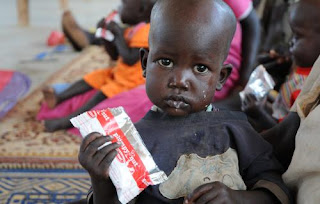 Globally, about 50 million children less than 5 years are wasted (too thin) at any one time; of these, over 17 million are severely wasted. These children are at high risk of death or may suffer from diseases and complications that will greatly affect their future life. Much more common is stunting (failure to achieve normal growth in length or height): it affects more than 160 million children that may not reach their developmental potential, mainly in south Asia and sub-Saharan Africa.
During the past decade or more the news media have focused on claims that the “solution” to reduce the mortality and morbidity from infectious diseases in the form of specific food products, often referred to as “ready-to-use foods.” These foods have a high nutrient density and a low water activity; thus, they do not support bacterial growth even without refrigeration. They need no cooking or other preparation and can be fed directly from their packaging with no need for training. The “ready-to-use therapeutic foods” (RUTF) are for use in the treatment of severe acute malnutrition (SAM).
The introduction of RUTFs in the management of SAM has allowed health authorities to extend effective treatment beyond hospitals, i.e. in out-patient units or at home. As a consequence, the case fatality rates recorded in hospitals, usually less than 10%, can be achieved largely outside the hospital environment, thus greatly reducing cost and the burden on in-patient health care facilities, and allowing an increased coverage. This, however, is far from universal, and many cases, possibly the worst cases, are not yet reached by programmes. In addition, proof of the advantages of RUTFs over other products is weak. In addition, RUTFs have their downside. They are too expensive to be used for anything else besides treatment of SAM. Their provision depends often on short-term external funding for humanitarian or emergency programmes. They tend to be monopolized by a handful of manufacturers able to put in place strict quality control measures. Children treated with RUTFs require extra water; if clean water is not available, RUTF alone will not result in a healthy child. The product does not contribute to teaching the child to like the taste of the healthy local foods needed to avoid malnutrition in the future. Finally, they are only part of the solution: prevention and rehabilitation of SAM need much more than RUTFs. And SAM is only the tip of the malnutrition iceberg: 90% of malnutrition consists of forms other than SAM, and RUTFs are neither necessary nor appropriate in treating them.
Globally, about 50 million children less than 5 years are wasted (too thin) at any one time; of these, over 17 million are severely wasted. These children are at high risk of death or may suffer from diseases and complications that will greatly affect their future life. Much more common is stunting (failure to achieve normal growth in length or height): it affects more than 160 million children that may not reach their developmental potential, mainly in south Asia and sub-Saharan Africa.
During the past decade or more the news media have focused on claims that the “solution” to reduce the mortality and morbidity from infectious diseases in the form of specific food products, often referred to as “ready-to-use foods.” These foods have a high nutrient density and a low water activity; thus, they do not support bacterial growth even without refrigeration. They need no cooking or other preparation and can be fed directly from their packaging with no need for training. The “ready-to-use therapeutic foods” (RUTF) are for use in the treatment of severe acute malnutrition (SAM).
The introduction of RUTFs in the management of SAM has allowed health authorities to extend effective treatment beyond hospitals, i.e. in out-patient units or at home. As a consequence, the case fatality rates recorded in hospitals, usually less than 10%, can be achieved largely outside the hospital environment, thus greatly reducing cost and the burden on in-patient health care facilities, and allowing an increased coverage. This, however, is far from universal, and many cases, possibly the worst cases, are not yet reached by programmes. In addition, proof of the advantages of RUTFs over other products is weak. In addition, RUTFs have their downside. They are too expensive to be used for anything else besides treatment of SAM. Their provision depends often on short-term external funding for humanitarian or emergency programmes. They tend to be monopolized by a handful of manufacturers able to put in place strict quality control measures. Children treated with RUTFs require extra water; if clean water is not available, RUTF alone will not result in a healthy child. The product does not contribute to teaching the child to like the taste of the healthy local foods needed to avoid malnutrition in the future. Finally, they are only part of the solution: prevention and rehabilitation of SAM need much more than RUTFs. And SAM is only the tip of the malnutrition iceberg: 90% of malnutrition consists of forms other than SAM, and RUTFs are neither necessary nor appropriate in treating them.

Advantages & Disadvantages of Green Tea
By James Achanyi-Fontem Green tea is one of three types of tea known for their health benefits. Historically, green tea has been very popular in eastern countries such as Japan, Thailand and India. While green tea may offer many advantages, such as a number of health benefits, it also has disadvantages as well. Green tea is contraindicated for some health conditions. When in doubt, always consult your doctor or health-care provider for recommendations before consuming green tea.
Reduced Risk of Heart Disease
According to Harvard Medical School’s Health Watch, green tea contains antioxidants that help lower bad cholesterol and increase good cholesterol. It can promote arterial health as well. Green tea is also beneficial for blood pressure by reducing the risks of developing hypertension.
Cancer Reduction
The University of Maryland Medical Center notes that green tea has been studied in relation to different types of cancer. Bladder cancer, breast cancer, ovarian cancer and esophageal cancer all appear in lower rates in individuals who drink green tea. The beverage may also increase survival rates for some cancers, such as bladder cancer. Polyphenols, powerful antioxidants contained in green tea, are thought to be responsible for the cancer reduction and survival rates.
Caffeine
Green tea contains caffeine, which may be unsuitable for individuals with a heart condition, including hypertension. You should also speak to your doctor prior to drinking green tea if you have any disorders involving your central nervous system or an anxiety disorder. Caffeine may worsen these conditions or interact with medications meant to control them. Pregnancy also requires that caffeine intake be limited, so consult your midwife or obstetrician about the safety of consuming green tea if you are pregnant.
Green tea is one of three types of tea known for their health benefits. Historically, green tea has been very popular in eastern countries such as Japan, Thailand and India. While green tea may offer many advantages, such as a number of health benefits, it also has disadvantages as well. Green tea is contraindicated for some health conditions. When in doubt, always consult your doctor or health-care provider for recommendations before consuming green tea.
Reduced Risk of Heart Disease
According to Harvard Medical School’s Health Watch, green tea contains antioxidants that help lower bad cholesterol and increase good cholesterol. It can promote arterial health as well. Green tea is also beneficial for blood pressure by reducing the risks of developing hypertension.
Cancer Reduction
The University of Maryland Medical Center notes that green tea has been studied in relation to different types of cancer. Bladder cancer, breast cancer, ovarian cancer and esophageal cancer all appear in lower rates in individuals who drink green tea. The beverage may also increase survival rates for some cancers, such as bladder cancer. Polyphenols, powerful antioxidants contained in green tea, are thought to be responsible for the cancer reduction and survival rates.
Caffeine
Green tea contains caffeine, which may be unsuitable for individuals with a heart condition, including hypertension. You should also speak to your doctor prior to drinking green tea if you have any disorders involving your central nervous system or an anxiety disorder. Caffeine may worsen these conditions or interact with medications meant to control them. Pregnancy also requires that caffeine intake be limited, so consult your midwife or obstetrician about the safety of consuming green tea if you are pregnant.

50 Years of Living Successfully with Diabetes
By Stephen Ponder March 1, 2016 marked my 50 year anniversary living with juvenile diabetes. Half a century ago, my parents wisely took a symptomatic 9 year old boy to see his pediatrician for what would ultimately develop into a 10 day hospital admission ushering in a new reality which has now existed five decades.
Back then I didn’t expect to ever see this day. My parents privately didn’t believe I would be around too long. That was what we were led to believe at the time.
We probably weren’t any different than other families. After all, the only point of reference back then was based on the prior four decades. Recall that insulin therapy had only been around 44 years when I was diagnosed. The ‘facts of life’ about living with diabetes were not very encouraging. People survived with diabetes, but faced a gauntlet of new challenges. Insulin was life sustaining, but it was not a cure. A new door was now opened to the world of diabetes complications.
Early on, I learned to fear blindness and failing kidneys. I came to feel it was just my destiny. But as I later entered medical school and began to meet some new inspiring people, my perspective began to change. I began to better understand the nature of the problems I feared out of ignorance. Soon I started to realize that my fate largely rested in my own hands. I could now shape my destiny. Knowledge did evolve into power.
Marriage, children and a busy career soon followed. It became clear that my life with diabetes was irrevocably different than what would have transpired in its absence. And as life’s experiences unfolded it became clear that I had begun to reclaim my life from the clutches of my earlier fears.
I would be lying if I said I like having diabetes. I don’t. But I like my life with diabetes very much. Whether I like it or not, diabetes has shaped who I am and who I’ve been able to help over the past 35 years as a health care provider.
In the natural world order, I should have died a half century ago. But this did not happen. Why? I assume I will find out when I meet my Creator. What I do know is that I have a purpose.
Mark Twain said the two most important days in life are the day you’re born and the day you find out why. I do feel I now know why I am here. And that awareness is one of my greatest gifts from God.
For all those reading this, my message to you is that a life lived well with diabetes (and many other chronic diseases), is very much within reach. Each day is a gift. Each family member or friend is a priceless treasure. We can all make a difference.
With or without diabetes, life is a series of choices. Choose well. Embrace today and appreciate each sunrise.
Now I’ve got to get ready for work and take out the trash. Have a splendid day everyone, I woke up today. Therefore I’ve won one more day over diabetes.
Stephen Ponder
Type 1 diabetes diagnosed March 1, 1956. Board Certified Pediatric Endocrinologist since 1990. CDE since 1989. Directs one of the largest children's residential diabetes camping programs in the world since 1989. Former Chair of the NCBDE. Author of the groundbreaking book "Sugar Surfing, Managing type 1 diabetes in a Modern World". International speaker, clinical researcher and community advocate. Directs a free clinic for homeless and uninsured children. Currently directs the Pediatric Residency Training Program at McLane Children's Hospital in Temple, Texas. Clinical Professor of Pediatrics with Texas A&M University School of Medicine.
March 1, 2016 marked my 50 year anniversary living with juvenile diabetes. Half a century ago, my parents wisely took a symptomatic 9 year old boy to see his pediatrician for what would ultimately develop into a 10 day hospital admission ushering in a new reality which has now existed five decades.
Back then I didn’t expect to ever see this day. My parents privately didn’t believe I would be around too long. That was what we were led to believe at the time.
We probably weren’t any different than other families. After all, the only point of reference back then was based on the prior four decades. Recall that insulin therapy had only been around 44 years when I was diagnosed. The ‘facts of life’ about living with diabetes were not very encouraging. People survived with diabetes, but faced a gauntlet of new challenges. Insulin was life sustaining, but it was not a cure. A new door was now opened to the world of diabetes complications.
Early on, I learned to fear blindness and failing kidneys. I came to feel it was just my destiny. But as I later entered medical school and began to meet some new inspiring people, my perspective began to change. I began to better understand the nature of the problems I feared out of ignorance. Soon I started to realize that my fate largely rested in my own hands. I could now shape my destiny. Knowledge did evolve into power.
Marriage, children and a busy career soon followed. It became clear that my life with diabetes was irrevocably different than what would have transpired in its absence. And as life’s experiences unfolded it became clear that I had begun to reclaim my life from the clutches of my earlier fears.
I would be lying if I said I like having diabetes. I don’t. But I like my life with diabetes very much. Whether I like it or not, diabetes has shaped who I am and who I’ve been able to help over the past 35 years as a health care provider.
In the natural world order, I should have died a half century ago. But this did not happen. Why? I assume I will find out when I meet my Creator. What I do know is that I have a purpose.
Mark Twain said the two most important days in life are the day you’re born and the day you find out why. I do feel I now know why I am here. And that awareness is one of my greatest gifts from God.
For all those reading this, my message to you is that a life lived well with diabetes (and many other chronic diseases), is very much within reach. Each day is a gift. Each family member or friend is a priceless treasure. We can all make a difference.
With or without diabetes, life is a series of choices. Choose well. Embrace today and appreciate each sunrise.
Now I’ve got to get ready for work and take out the trash. Have a splendid day everyone, I woke up today. Therefore I’ve won one more day over diabetes.
Stephen Ponder
Type 1 diabetes diagnosed March 1, 1956. Board Certified Pediatric Endocrinologist since 1990. CDE since 1989. Directs one of the largest children's residential diabetes camping programs in the world since 1989. Former Chair of the NCBDE. Author of the groundbreaking book "Sugar Surfing, Managing type 1 diabetes in a Modern World". International speaker, clinical researcher and community advocate. Directs a free clinic for homeless and uninsured children. Currently directs the Pediatric Residency Training Program at McLane Children's Hospital in Temple, Texas. Clinical Professor of Pediatrics with Texas A&M University School of Medicine.

27 Ways to Fight Food Waste
By Becky Striepe Chances are you’ve seen lists of ways to fight food waste before. The list below, though, is based on hard data from a committee dedicated to ending food waste.
ReFED is a committee that’s working to combat food waste on every front. They’ve looked at food waste from all angles and identified 27 ways that individuals, governments and businesses can fight food waste. When they talk about food waste, they’re talking about more than just the food itself. They also look at packaging waste and water waste associated with excess food.
The group is made up of more than 30 businesses, nonprofits and leaders. In 2015, they conducted an economic study on food waste, which they called the Roadmap to Reduce U.S. Food Waste. Their mission is to fight food waste on a large scale by showing how it can financially benefit companies while doing good for people and the planet.
I’m sure you’re sick of hearing that we throw away four billion tons of food per year. When you look at food waste by the numbers, it can feel like an insurmountable problem. ReFED’s mission is to “fill the gap between awareness and action” by looking at our food system as a whole. These are the 27 ways that we need to attack our food waste problem.
Chances are you’ve seen lists of ways to fight food waste before. The list below, though, is based on hard data from a committee dedicated to ending food waste.
ReFED is a committee that’s working to combat food waste on every front. They’ve looked at food waste from all angles and identified 27 ways that individuals, governments and businesses can fight food waste. When they talk about food waste, they’re talking about more than just the food itself. They also look at packaging waste and water waste associated with excess food.
The group is made up of more than 30 businesses, nonprofits and leaders. In 2015, they conducted an economic study on food waste, which they called the Roadmap to Reduce U.S. Food Waste. Their mission is to fight food waste on a large scale by showing how it can financially benefit companies while doing good for people and the planet.
I’m sure you’re sick of hearing that we throw away four billion tons of food per year. When you look at food waste by the numbers, it can feel like an insurmountable problem. ReFED’s mission is to “fill the gap between awareness and action” by looking at our food system as a whole. These are the 27 ways that we need to attack our food waste problem.
 1. Consumer Education Campaigns – The more consumers—like you and I—know about food waste, the more we can do to waste less. Check out these seven ways that individuals can reduce food waste at home.
2. Standardized Date Labeling - One UK study found that extending “Sell By” dates by just one day would keep 50 million pounds of food out of landfills.
3. Packaging Adjustments - Companies need to choose packaging to minimize packaging waste and encourage consumers to eat the food before it goes bad.
4. Donation Matching Software – There is software out there already that connects excess food with people who need it. These apps help nonprofits, like food banks, recover edible excess food.
5. Standardized Donation Regulation – Local food safety regulations often stop nonprofits from recovering food waste. Standardizing these laws would make it a lot easier for these groups to do what they set out to do.
6. Value-Added Processing – This is all about turning donated food into something appealing. Ugly fruit can be turned into jam, for example. Ugly veggies are still appealing in a soup or stew.
7. Donation Liability Education - Grocery stores and restaurants often don’t donate excess food because they worry about getting sued. An education program could recover 95 million meals per year.
8. Donation Storage and Handling – Donated food needs to be stored properly, or it does spoil. Organizations like food banks and food hubs need more refrigeration and freezer space to handle the volume of excess food.
9. Spoilage Prevention Packaging – High tech packaging can extend food’s shelf life. For example, ethylene-absorbing pads help fruit stay fresh longer. They absorb ethylene, a gas that ripens the fruit.
10. Donation Transportation – Groups recovering food waste need better ways to get the food to people who need it, both in their communities and further away.
11. Waste Tracking and Analytics – One of the best ways to fight food waste is to keep up with where it’s happening. Analytics would help businesses, like grocery stores and restaurants, see where they’re wasting food, so they can address problems on the fly.
12. Trayless Dining – It turns out that cafeteria trays encourage people to take more food than they can eat. Ditching the trays means less over-serving and, therefore, less wasted food.
13. Smaller Plates – This is another step that both businesses and consumers can take. A smaller plate helps you waste less in the same way that it helps you eat less: you tend to load on a more reasonable amount of food.
14. Manufacturing Line Optimization – A lot of food waste is generated at the factory level. Making these processes more efficient would mean less spoilage on the factory floor.
15. Cold Chain Management – This is about keeping cold food cold by making fewer stops between farm and plate.
16. Donation Tax Incentives – This is like what Italy is trying to do with their new food waste law. Instead of punishing businesses who waste food, they will be giving big tax breaks to businesses who donate. They treat excess food like the valuable gift that it is.
17. Improved Inventory Management – Tracking products by remaining shelf life would enable stores to feature food that’s closer to its sell by date.
18. Produce Specifications – Grocers and farmers often don’t sell “ugly” produce. New specifications would get more edible produce on the shelf, even if that produce isn’t picture perfect.
19. Secondary Resellers – This is also not a totally new concept. There are food waste grocery stores now, but this concept is definitely one worth expanding on.
20. Home Composting – If you’re new to composting at home, it might seem overwhelming. Here are some great tips to help you get started.
21. Commercial Greywater – Companies can save a lot of money and reduce wasted water by using greywater in their sewage systems.
22. Centralized Anaerobic Digestion - Inedible food waste can actually be used to generate clean energy!
23. Centralized Composting – Like I mentioned in #20, composting at home can be overwhelming. Municipal composting, like they have in San Francisco makes it easy. Your trash goes in one bin, recyclables in another and food waste in a third bin. Some areas also have private centralized composting—companies that pick up or accept food and farm waste for composting.
24. Water Resources Recover Facility with Anaerobic Digestion - Think of this as a pipeline—sometimes a literal one—that takes food waste to anaerobic digestion facilities (see #22).
25. Animal Feed – Heat-treated food waste can be used as animal feed. You probably already know that animal agriculture is terribly inefficient.
26. Community Composting – This is basically centralized composting, but for a smaller area. It works best in urban areas, where populations are dense.
27. In-Vessel Composting – Smaller businesses can compost quickly on-site with special equipment and save on trash fees while generating dirt to use in their own landscaping.
If you want to dive into even more detail, their website has an interactive graph where you can see the impacts of each action and get more information about them.
1. Consumer Education Campaigns – The more consumers—like you and I—know about food waste, the more we can do to waste less. Check out these seven ways that individuals can reduce food waste at home.
2. Standardized Date Labeling - One UK study found that extending “Sell By” dates by just one day would keep 50 million pounds of food out of landfills.
3. Packaging Adjustments - Companies need to choose packaging to minimize packaging waste and encourage consumers to eat the food before it goes bad.
4. Donation Matching Software – There is software out there already that connects excess food with people who need it. These apps help nonprofits, like food banks, recover edible excess food.
5. Standardized Donation Regulation – Local food safety regulations often stop nonprofits from recovering food waste. Standardizing these laws would make it a lot easier for these groups to do what they set out to do.
6. Value-Added Processing – This is all about turning donated food into something appealing. Ugly fruit can be turned into jam, for example. Ugly veggies are still appealing in a soup or stew.
7. Donation Liability Education - Grocery stores and restaurants often don’t donate excess food because they worry about getting sued. An education program could recover 95 million meals per year.
8. Donation Storage and Handling – Donated food needs to be stored properly, or it does spoil. Organizations like food banks and food hubs need more refrigeration and freezer space to handle the volume of excess food.
9. Spoilage Prevention Packaging – High tech packaging can extend food’s shelf life. For example, ethylene-absorbing pads help fruit stay fresh longer. They absorb ethylene, a gas that ripens the fruit.
10. Donation Transportation – Groups recovering food waste need better ways to get the food to people who need it, both in their communities and further away.
11. Waste Tracking and Analytics – One of the best ways to fight food waste is to keep up with where it’s happening. Analytics would help businesses, like grocery stores and restaurants, see where they’re wasting food, so they can address problems on the fly.
12. Trayless Dining – It turns out that cafeteria trays encourage people to take more food than they can eat. Ditching the trays means less over-serving and, therefore, less wasted food.
13. Smaller Plates – This is another step that both businesses and consumers can take. A smaller plate helps you waste less in the same way that it helps you eat less: you tend to load on a more reasonable amount of food.
14. Manufacturing Line Optimization – A lot of food waste is generated at the factory level. Making these processes more efficient would mean less spoilage on the factory floor.
15. Cold Chain Management – This is about keeping cold food cold by making fewer stops between farm and plate.
16. Donation Tax Incentives – This is like what Italy is trying to do with their new food waste law. Instead of punishing businesses who waste food, they will be giving big tax breaks to businesses who donate. They treat excess food like the valuable gift that it is.
17. Improved Inventory Management – Tracking products by remaining shelf life would enable stores to feature food that’s closer to its sell by date.
18. Produce Specifications – Grocers and farmers often don’t sell “ugly” produce. New specifications would get more edible produce on the shelf, even if that produce isn’t picture perfect.
19. Secondary Resellers – This is also not a totally new concept. There are food waste grocery stores now, but this concept is definitely one worth expanding on.
20. Home Composting – If you’re new to composting at home, it might seem overwhelming. Here are some great tips to help you get started.
21. Commercial Greywater – Companies can save a lot of money and reduce wasted water by using greywater in their sewage systems.
22. Centralized Anaerobic Digestion - Inedible food waste can actually be used to generate clean energy!
23. Centralized Composting – Like I mentioned in #20, composting at home can be overwhelming. Municipal composting, like they have in San Francisco makes it easy. Your trash goes in one bin, recyclables in another and food waste in a third bin. Some areas also have private centralized composting—companies that pick up or accept food and farm waste for composting.
24. Water Resources Recover Facility with Anaerobic Digestion - Think of this as a pipeline—sometimes a literal one—that takes food waste to anaerobic digestion facilities (see #22).
25. Animal Feed – Heat-treated food waste can be used as animal feed. You probably already know that animal agriculture is terribly inefficient.
26. Community Composting – This is basically centralized composting, but for a smaller area. It works best in urban areas, where populations are dense.
27. In-Vessel Composting – Smaller businesses can compost quickly on-site with special equipment and save on trash fees while generating dirt to use in their own landscaping.
If you want to dive into even more detail, their website has an interactive graph where you can see the impacts of each action and get more information about them.


Sunday, April 10, 2016
Cameroon Link IYCF Linkages
By James Achanyi-Fontem,
CEO, Cameroon Link IBFAN was founded in 1979. It is a network of 273 groups in 168 countries. Member groups include consumer organisations, health workers associations, parents’ Support groups and diverse organizations in the social media and justice movements. It has also individual members. For example, the group in Canada and United Kingdom have more than 1000 members each. Each group is autonomous and raises its own funds, with the assistance of IBFAN’s Regional office and Programme Coordinating Offices, in accordance with the Seven Principles of the Global Body (IBFAN). IBFAN Cameroon brings together some 46 independent organisations implanted in the 10 regions of Cameroon. The greatest number of associations are in the Littoral region.
IBFAN Cameroon’s goal
IBFAN Cameroon improves the wellbeing of women and children through contributing to the reduction of five morbidity and mortality rates and improving maternal health. Improved infant and young child feeding (IYCF) practices that could prevent the deaths of 1.000.000 children under the age of 5 years every year and save more than 300 thousand from the life – long debilitating effects of stunning and severe malnutrition (WHO Sixty – third World Health Assembly WHA63.23, Agenda item 11.6). It should be noted that Improved IYCF can also contribute to achieving Sustainable Development Goals (SDG’S) 2016 – 2030. IBFAN Cameroon does not use one single approach to achieve its goal but rather uses a variety of strategies and initiatives.
According to the World Health Organisation (WHO), adequate nutrition, beginning in early stages of life is crucial to ensure good physical and mental development and long-term health. The key recommendation is to initiate breastfeeding within the first hour of birth and breastfeed exclusively for the first six months of the child’s life. The benefits of breastfeeding are well known, including providing the perfect nutrition and protection from life-threatening ailments, obesity and non-communicable diseases. However, more than half of the world’s new-borns are not breastfed within the first hour of birth. In Cameroon, this is rated at 92% Only 38% of infants are exclusively breastfed in the first six months of life in Cameroon (WBti) . Several reports have highlighted the fact that sub-optimal breastfeeding has greatly contributed to malnutrition, which continues to be a major public health challenge especially in northern and eastern regions of Cameroon. In these regions, 20% of the children below 5 years of age are stunted. It is particularly noteworthy that Cameroon is faced with the double burden of under-nutrition and overweight in the Far North and East regions due to the presence of Boko Haram and refugees from neighbouring countries to Cameroon. In 2013, more than two-thirds of the 2.5 million under-weight and overweight children under 5 years of age resided in low and middle-income health districts of Cameroon. The IBFAN Cameroon agenda is piloted by the Federation of Cameroon Breastfeeding Promotion Asso0ciations (FECABPA) coordinated by Cameroon Link and the Ministry of Public Health.
IBFAN was founded in 1979. It is a network of 273 groups in 168 countries. Member groups include consumer organisations, health workers associations, parents’ Support groups and diverse organizations in the social media and justice movements. It has also individual members. For example, the group in Canada and United Kingdom have more than 1000 members each. Each group is autonomous and raises its own funds, with the assistance of IBFAN’s Regional office and Programme Coordinating Offices, in accordance with the Seven Principles of the Global Body (IBFAN). IBFAN Cameroon brings together some 46 independent organisations implanted in the 10 regions of Cameroon. The greatest number of associations are in the Littoral region.
IBFAN Cameroon’s goal
IBFAN Cameroon improves the wellbeing of women and children through contributing to the reduction of five morbidity and mortality rates and improving maternal health. Improved infant and young child feeding (IYCF) practices that could prevent the deaths of 1.000.000 children under the age of 5 years every year and save more than 300 thousand from the life – long debilitating effects of stunning and severe malnutrition (WHO Sixty – third World Health Assembly WHA63.23, Agenda item 11.6). It should be noted that Improved IYCF can also contribute to achieving Sustainable Development Goals (SDG’S) 2016 – 2030. IBFAN Cameroon does not use one single approach to achieve its goal but rather uses a variety of strategies and initiatives.
According to the World Health Organisation (WHO), adequate nutrition, beginning in early stages of life is crucial to ensure good physical and mental development and long-term health. The key recommendation is to initiate breastfeeding within the first hour of birth and breastfeed exclusively for the first six months of the child’s life. The benefits of breastfeeding are well known, including providing the perfect nutrition and protection from life-threatening ailments, obesity and non-communicable diseases. However, more than half of the world’s new-borns are not breastfed within the first hour of birth. In Cameroon, this is rated at 92% Only 38% of infants are exclusively breastfed in the first six months of life in Cameroon (WBti) . Several reports have highlighted the fact that sub-optimal breastfeeding has greatly contributed to malnutrition, which continues to be a major public health challenge especially in northern and eastern regions of Cameroon. In these regions, 20% of the children below 5 years of age are stunted. It is particularly noteworthy that Cameroon is faced with the double burden of under-nutrition and overweight in the Far North and East regions due to the presence of Boko Haram and refugees from neighbouring countries to Cameroon. In 2013, more than two-thirds of the 2.5 million under-weight and overweight children under 5 years of age resided in low and middle-income health districts of Cameroon. The IBFAN Cameroon agenda is piloted by the Federation of Cameroon Breastfeeding Promotion Asso0ciations (FECABPA) coordinated by Cameroon Link and the Ministry of Public Health. Programmes
Protection Of Women and Children’s Rights to health
Protection of women and children’s right to health through maternity benefits and other efforts: IBFAN Cameroon advocates for national government to support the ILO Convention 183 of 2000 on Maternity Benefits and Recommendation 191 on the rights of all working women.
Public Awareness and Advocacy
Public awareness and advocacy is intended to create a more visible, vocal and trusted Cameroon Network at both the 10 Regional and National levels.
Optimal Infant and Child Feeding prevention of MTCT
Optimal infant and young child feeding and prevention of MTCT is intended to contribute to HIV- free child survival and the reduction of morbidity and mortality of infants and young children born to HIV+ mothers through quality counselling on infant feeding with the mothers.
The Baby Friendly Hospital Initiative
The Baby Friendly Hospital Initiative and Baby Friendly Community Initiative: intended to promote protect and support breast feeding and food based complementary feeding.
Infant Feeding in Emergencies
Infant feeding in emergencies is intended to support government and international organisations through the enforcement of an Emergency Code Monitoring tool, designed to support the work of humanitarian agencies, Cameroon Link and IYCF advocates where it is deemed necessary.
Men and Youth involvement and Gender Awareness
Men and youth involvement and Gender Awareness Groups in Cameroon create awareness of gender mainstreaming, support women and educate other men and youths in IYCF issues within the scope of WABA (Men’s Working Group) Agenda.
Camlink Y4DA Initiative
Goal
“Develop and sustain young advocates to promote, protect and support optimal maternal, infant and young child health and nutrition”
Although the need for community involvement in youth programs seems clear, only a few organizations have actually attempted to measure the added value of incorporating such participation into the promotion of nutrition of the youth and infants in such programs. Clearly, adolescence is a pivotal stage of the life cycle, and in turn, provides a unique opportunity to foster transition from childhood to adulthood. Ensuring that the nutritional needs of the adolescents are met is essential to this transition. Youth participation increases the impact of Youth Reproductive Health and HIV/AIDS programs through ensuring greater relevance to the problems and issues faced by young people and increasing sustainability of interventions.
The youth as part of many social domains have power to share with others about the benefits of good health and nutrition practices including promotion of breastfeeding in the communities as the number of teen mothers is on the increase in schools, universities, work places and youth organizations. There are a large number of youth groups and organizations in Cameroon that are valuable in the promotion of appropriate IYCF and also promote their general health and nutrition.
Cameroon Link and FECABPA are leading organizations in the promotion of IYCF and its relationship with the Ministries of Health, Youth and Sports, to access health facilities and communities is well positioned to support, promote, and protect appropriate infant and young child feeding (IYCF) in the country. The creation of a programme for the youth to involve them in the promotion of its objectives was another way of spreading its scope to help in the improvement of the health of the infants and mothers especially the young parents. Camlink Y4DA is involved in farming activities for income generation purposes.
Based on the above justification, the camlink Y4DA Initiative came as an answer to provide support to the scale up of interventions on appropriate IYCF and the general health and nutrition of youth in Cameroon that IBFAN Cameroon is already operating in. IBFAN Cameroon currently has 20 active Youth Groups in Cameroon like other African countries.
The overall objective of the camlink Y4DA Network is to develop and sustain young advocates to promote, protect, and support optimal infant and young child feeding. The IAYN is mandated to participate in the affairs of IBFAN Africa through a coordinator or representative. The youth desks provided for under the Cameroon Link and FECABPA Offices are charged with the responsibility of coordinating and communicating issues affecting the youth and spearhead development and implementation of youth programs at the national level and as a liaison with the other regional bodies and initiatives within the health, social and nutrition fraternity on matters pertaining to the youth.
Programmes
Protection Of Women and Children’s Rights to health
Protection of women and children’s right to health through maternity benefits and other efforts: IBFAN Cameroon advocates for national government to support the ILO Convention 183 of 2000 on Maternity Benefits and Recommendation 191 on the rights of all working women.
Public Awareness and Advocacy
Public awareness and advocacy is intended to create a more visible, vocal and trusted Cameroon Network at both the 10 Regional and National levels.
Optimal Infant and Child Feeding prevention of MTCT
Optimal infant and young child feeding and prevention of MTCT is intended to contribute to HIV- free child survival and the reduction of morbidity and mortality of infants and young children born to HIV+ mothers through quality counselling on infant feeding with the mothers.
The Baby Friendly Hospital Initiative
The Baby Friendly Hospital Initiative and Baby Friendly Community Initiative: intended to promote protect and support breast feeding and food based complementary feeding.
Infant Feeding in Emergencies
Infant feeding in emergencies is intended to support government and international organisations through the enforcement of an Emergency Code Monitoring tool, designed to support the work of humanitarian agencies, Cameroon Link and IYCF advocates where it is deemed necessary.
Men and Youth involvement and Gender Awareness
Men and youth involvement and Gender Awareness Groups in Cameroon create awareness of gender mainstreaming, support women and educate other men and youths in IYCF issues within the scope of WABA (Men’s Working Group) Agenda.
Camlink Y4DA Initiative
Goal
“Develop and sustain young advocates to promote, protect and support optimal maternal, infant and young child health and nutrition”
Although the need for community involvement in youth programs seems clear, only a few organizations have actually attempted to measure the added value of incorporating such participation into the promotion of nutrition of the youth and infants in such programs. Clearly, adolescence is a pivotal stage of the life cycle, and in turn, provides a unique opportunity to foster transition from childhood to adulthood. Ensuring that the nutritional needs of the adolescents are met is essential to this transition. Youth participation increases the impact of Youth Reproductive Health and HIV/AIDS programs through ensuring greater relevance to the problems and issues faced by young people and increasing sustainability of interventions.
The youth as part of many social domains have power to share with others about the benefits of good health and nutrition practices including promotion of breastfeeding in the communities as the number of teen mothers is on the increase in schools, universities, work places and youth organizations. There are a large number of youth groups and organizations in Cameroon that are valuable in the promotion of appropriate IYCF and also promote their general health and nutrition.
Cameroon Link and FECABPA are leading organizations in the promotion of IYCF and its relationship with the Ministries of Health, Youth and Sports, to access health facilities and communities is well positioned to support, promote, and protect appropriate infant and young child feeding (IYCF) in the country. The creation of a programme for the youth to involve them in the promotion of its objectives was another way of spreading its scope to help in the improvement of the health of the infants and mothers especially the young parents. Camlink Y4DA is involved in farming activities for income generation purposes.
Based on the above justification, the camlink Y4DA Initiative came as an answer to provide support to the scale up of interventions on appropriate IYCF and the general health and nutrition of youth in Cameroon that IBFAN Cameroon is already operating in. IBFAN Cameroon currently has 20 active Youth Groups in Cameroon like other African countries.
The overall objective of the camlink Y4DA Network is to develop and sustain young advocates to promote, protect, and support optimal infant and young child feeding. The IAYN is mandated to participate in the affairs of IBFAN Africa through a coordinator or representative. The youth desks provided for under the Cameroon Link and FECABPA Offices are charged with the responsibility of coordinating and communicating issues affecting the youth and spearhead development and implementation of youth programs at the national level and as a liaison with the other regional bodies and initiatives within the health, social and nutrition fraternity on matters pertaining to the youth. Cameroon Link Key Activity Areas
Advocacy for and support for the establishment and strengthening of the youth groups for optimal maternal, infant and young child health and nutrition across the national network.
Collaboration with already existing youth groups and also spearheading the establishment of more new groups both at the national and district health levels in the promotion of child and youth rights to better health and nutrition with an emphasis on the young parents. Scaling up of interventions that have been successful in the already implementing country regions will be a key highlight in efforts to grow the network. This is through communicating leadership opportunities and conducting trainings for youth; building partnerships with community agencies to develop common goal for youth involvement; engaging community agencies to provide leadership opportunities for youth within the network; and enhancing services for youth and families across child serving agencies through resource mobilization to provide training for youth advocates.
Strengthening peer education in communities, schools and other institutions among the national network
Peer education is considered one of many tools available to reach young people with information and also in developing their skills for behaviour change. The camlink Y4DA Network strives to develop and promote peer education programs that are in support for the rights of young people to scientifically accurate information about nutrition, reproductive health, HIV/AIDS, and where needed, access to youth-friendly services. Using current ITC technological advancements to come up with ideas and concepts that are relevant in today’s communication environment and needs of the young people.
Participation in the development of interventions and programs that promote optimal nutrition and health among the youth in the national network
Attainment of full growth especially among adolescent girls is very important. Pregnancy puts severe nutritional demands on a woman’s body, and among girls who become pregnant there are high risks of maternal mortality, pregnancy complications, and delivery of low birth weight infants. The National Youth Network is involved in development of programs that are directed towards education of youth on good nutrition and reproductive health practices. This also involves building partnerships with agencies in support for rights based programmes, youth empowerment and development programmes through entrepreneurship and investment projects that support and improve livelihoods of youth within communities.
Cameroon Link Key Activity Areas
Advocacy for and support for the establishment and strengthening of the youth groups for optimal maternal, infant and young child health and nutrition across the national network.
Collaboration with already existing youth groups and also spearheading the establishment of more new groups both at the national and district health levels in the promotion of child and youth rights to better health and nutrition with an emphasis on the young parents. Scaling up of interventions that have been successful in the already implementing country regions will be a key highlight in efforts to grow the network. This is through communicating leadership opportunities and conducting trainings for youth; building partnerships with community agencies to develop common goal for youth involvement; engaging community agencies to provide leadership opportunities for youth within the network; and enhancing services for youth and families across child serving agencies through resource mobilization to provide training for youth advocates.
Strengthening peer education in communities, schools and other institutions among the national network
Peer education is considered one of many tools available to reach young people with information and also in developing their skills for behaviour change. The camlink Y4DA Network strives to develop and promote peer education programs that are in support for the rights of young people to scientifically accurate information about nutrition, reproductive health, HIV/AIDS, and where needed, access to youth-friendly services. Using current ITC technological advancements to come up with ideas and concepts that are relevant in today’s communication environment and needs of the young people.
Participation in the development of interventions and programs that promote optimal nutrition and health among the youth in the national network
Attainment of full growth especially among adolescent girls is very important. Pregnancy puts severe nutritional demands on a woman’s body, and among girls who become pregnant there are high risks of maternal mortality, pregnancy complications, and delivery of low birth weight infants. The National Youth Network is involved in development of programs that are directed towards education of youth on good nutrition and reproductive health practices. This also involves building partnerships with agencies in support for rights based programmes, youth empowerment and development programmes through entrepreneurship and investment projects that support and improve livelihoods of youth within communities. Policy Frameworks:
The camlink Y4DA Network puts into effect the strategy and focus areas of the plan of action of the African Youth Charter. The camlink Y4DA Strategy has been based on the priorities set within the IBFAN Africa policies under the theme “Developing young advocates for breastfeeding promotion”. The objectives and targets are aligned to the IBFAN Africa Strategic Plan (IASP), and it is in line with the African Union Decade Plan of Action (DPoA), the African Youth Charter and World Programme of Action for Youth to the Year 2000 and Beyond (WPAY). The camlink Y4DA Network operates within the framework of the Global Strategy on Infant and Young Child Feeding and works in the area of Nutrition; HIV and AIDS; Child Health; Reproductive Health as well as Health Promotion and Education.
Focus of Camlink Y4DA Initiative and Strategy is to:
Provide continuity in terms of strategic planning for the Cameroon Youth Network.
Capture critical lessons in implementation to guide strategic focus and investments for youth in the medium and long term, and consolidated investment targeting youth socio-economic empowerment;
Align the national network priorities with organizational, regional and country government policies and strategies in terms of health and nutrition for youth;
Ensure rights-based approach to youth development through meaningful participation and representation; and
Mainstream youth perspective in the efforts to achieve broad development goals and priorities
Conclusion:
Camlink Y4DA Initiative as implemented under the African programmes has become an avenue of fulfilment of the Organization’s objectives. Implementation of its activities both at health district and community levels is one way of strengthening efforts and upholding achievements so far reached by building the blocks for tomorrow’s breastfeeding promotion movement and concerted efforts and engagement of populations and organisations in support of this initiative will go a long way to ensure that SDGs, and other international initiatives are reached in Cameroon.
Monitoring and Evaluation
Cameroon Link is part of the global monitoring alliance for maternal and child nutrition: World Breastfeeding Trends Initiative (WBTi).
Capacity Development
Cameroon Link provides health district level or national training for Men, Women, Youth and Community Radio Stations, NGOs, CBOs, government health staff and other organisations involved in the area of maternal health and nutrition and child feeding.
UNICEF's work on statistics and monitoring
UNICEF has learned through experience that problems that go unmeasured often go unsolved. In collaboration with a wide range of partners, UNICEF gathers evidence on the situation of children and women around the world. It uses this knowledge to inform national and global decision-making with the objective of improving children’s well-being.
Some recent facts:
Policy Frameworks:
The camlink Y4DA Network puts into effect the strategy and focus areas of the plan of action of the African Youth Charter. The camlink Y4DA Strategy has been based on the priorities set within the IBFAN Africa policies under the theme “Developing young advocates for breastfeeding promotion”. The objectives and targets are aligned to the IBFAN Africa Strategic Plan (IASP), and it is in line with the African Union Decade Plan of Action (DPoA), the African Youth Charter and World Programme of Action for Youth to the Year 2000 and Beyond (WPAY). The camlink Y4DA Network operates within the framework of the Global Strategy on Infant and Young Child Feeding and works in the area of Nutrition; HIV and AIDS; Child Health; Reproductive Health as well as Health Promotion and Education.
Focus of Camlink Y4DA Initiative and Strategy is to:
Provide continuity in terms of strategic planning for the Cameroon Youth Network.
Capture critical lessons in implementation to guide strategic focus and investments for youth in the medium and long term, and consolidated investment targeting youth socio-economic empowerment;
Align the national network priorities with organizational, regional and country government policies and strategies in terms of health and nutrition for youth;
Ensure rights-based approach to youth development through meaningful participation and representation; and
Mainstream youth perspective in the efforts to achieve broad development goals and priorities
Conclusion:
Camlink Y4DA Initiative as implemented under the African programmes has become an avenue of fulfilment of the Organization’s objectives. Implementation of its activities both at health district and community levels is one way of strengthening efforts and upholding achievements so far reached by building the blocks for tomorrow’s breastfeeding promotion movement and concerted efforts and engagement of populations and organisations in support of this initiative will go a long way to ensure that SDGs, and other international initiatives are reached in Cameroon.
Monitoring and Evaluation
Cameroon Link is part of the global monitoring alliance for maternal and child nutrition: World Breastfeeding Trends Initiative (WBTi).
Capacity Development
Cameroon Link provides health district level or national training for Men, Women, Youth and Community Radio Stations, NGOs, CBOs, government health staff and other organisations involved in the area of maternal health and nutrition and child feeding.
UNICEF's work on statistics and monitoring
UNICEF has learned through experience that problems that go unmeasured often go unsolved. In collaboration with a wide range of partners, UNICEF gathers evidence on the situation of children and women around the world. It uses this knowledge to inform national and global decision-making with the objective of improving children’s well-being.
Some recent facts: • 16,000 children die every day, mostly from preventable or treatable causes.
• The births of nearly 230 million children under age 5 worldwide (about one in three) have never been officially recorded, depriving them of their right to a name and nationality.
• 2.4 billion people lack access to improved sanitation, including 946 million who are forced to resort to open defecation for lack of other options.
• Out of an estimated 35 million people living with HIV, over 2 million are 10 to 19 years old, and 56 per cent of them are girls.
• Globally, about one third of women aged 20 to 24 were child brides.
• Every 10 minutes, somewhere in the world, an adolescent girl dies as a result of violence.
• Nearly half of all deaths in children under age 5 are attributable to undernutrition. This translates into the unnecessary loss of about 3 million young lives a year.
Supporting data collection
UNICEF supports countries in collecting data related to children and women through Multiple Indicator Cluster Surveys (MICS), an international household survey programme. Since its inception in the mid-1990s, four rounds of MICS have been completed (in 1995-1996, 2000-2001, 2005-2006, 2009-2012) and a fifth is now under way (2013-2015). By 2015, over 280 surveys are expected to have been implemented in more than 100 low- and middle-income countries. Each round of surveys builds upon the last and offers new indicators to monitor trends and current priorities.
The MICS programme is designed to collect statistically sound, internationally comparable data on more than 100 indicators used by countries to assess the situation of children and women in the areas of education, health, gender equality, rights and protection. It also provides data required to monitor progress towards national and international goals and commitments aimed at promoting the welfare of children. As part of the MICS global programme, UNICEF provides technical support and training through a series of regional workshops covering questionnaire content, sampling and survey implementation, data processing, data quality and analysis, report writing, data archiving and dissemination and further analysis. Under the fourth round of MICS, close to 700 UNICEF staff and experts from developing countries were trained worldwide.
Multiple Indicator Cluster Surveys generate data on more than 20 indicators used to measure progress towards the Millennium Development Goals (MDGs), making the programme one of the largest single sources of data for MDG monitoring. The data generated in the fifth round of MICS (along with other nationally representative household surveys) is critically important in the final assessment of the MDGs, which was launched by the United Nations Secretary-General in September 2015.
The MICS programme has pioneered the development and implementation of new measurement tools in areas such as early childhood development, female genital mutilation/cutting, child discipline, hand washing, post-natal health care and low birthweight. MICS findings have been used extensively as a basis for policy decisions and programme interventions, and for the purpose of influencing public opinion on the situation of children and women around the world.
Leading data analysis
Compiling data
UNICEF maintains a series of global databases for tracking the situation of children and women globally. The databases include only statistically sound and nationally representative data from household surveys and other sources. They are updated annually through a process that draws on a wealth of data maintained by UNICEF’s network of 140 country offices.
Developing new methodologies
UNICEF plays an active – often leadership – role in a number of inter-agency monitoring groups on specific topics. Together with its inter-agency partners, UNICEF helps devise new methodologies, indicators and monitoring tools, build statistical capacity at the country level, develop joint estimates, and harmonize monitoring work across partners. UNICEF has also led the development of new indicators and methodologies for gathering relevant data on a number of priority issues, including education, child labour, child disability, child mortality, maternal mortality, water and sanitation, low birthweight, antenatal care, pneumonia, malaria, iodine deficiency disorder, female genital mutilation/cutting, and vitamin A deficiency.
Assessing progress towards international goals
UNICEF has undertaken extensive work on the development of indicators for national and international development goals and targets related to the well-being of children and women. These successful efforts include monitoring progress towards the Millennium Declaration and the MDGs, the World Fit for Children Declaration and Plan of Action, the United Nations General Assembly Special Session on HIV/AIDS and the African Summit on Malaria. UNICEF is spearheading the development of child survival indicators currently used in the Countdown to 2015 initiative.
Analysing data for evidence-based programming
UNICEF’s work in the area of data analysis highlights trends and emphasizes patterns found within the data. It also suggests how these data can be used strategically to inform programmatic efforts. Where possible, data are disaggregated by gender, age, residence, household income, education, and other key social and demographic variables to help uncover possible risk factors and inequities. UNICEF also promotes the advancement of research through the development of joint projects and collaboration with academic institutions and other agencies working at the national and international level.
Building capacity
Through its MICS programme, UNICEF provides in-country technical assistance and leadership to local researchers and organizations, thereby contributing to the improvement of national monitoring systems for children and women. UNICEF also conducts regional workshops on specialized topics in conjunction with government counterparts to enhance their capacity to understand, interpret, analyse, disseminate and use statistics. These workshops cover several objectives ranging from supporting further analysis of malaria data for improved programme monitoring and management and for policy formulation and harmonizing the methodologies used to derive estimates on access to water and sanitation to improving coverage estimates related to HIV and to child and maternal mortality. UNICEF maintains a series of global databases on key indicators found at data.unicef.org
Enhancing data dissemination
Researchers, programme managers and legislators worldwide count on UNICEF data to assess the situation of women and children and to plan and implement related policies and programmes. The media, both locally and internationally, also rely on such data to inform and substantiate their coverage of children and women and the issues that affect their lives.
Publications
UNICEF data are used for a variety of planning and monitoring purposes. They appear in UNICEF flagship publications such as The State of the World’s Children and Committing to Child Survival: A promise renewed and in a number of sector-specific reports. These include Progress on Drinking Water and Sanitation; Malaria and Children; and Female Genital Mutilation/Cutting: A statistical overview and exploration of the dynamics of change.
MICS dissemination tools
Tools produced to disseminate MICS data at the country and regional levels include printed materials, presentations, web links and those focusing on the media.
• 16,000 children die every day, mostly from preventable or treatable causes.
• The births of nearly 230 million children under age 5 worldwide (about one in three) have never been officially recorded, depriving them of their right to a name and nationality.
• 2.4 billion people lack access to improved sanitation, including 946 million who are forced to resort to open defecation for lack of other options.
• Out of an estimated 35 million people living with HIV, over 2 million are 10 to 19 years old, and 56 per cent of them are girls.
• Globally, about one third of women aged 20 to 24 were child brides.
• Every 10 minutes, somewhere in the world, an adolescent girl dies as a result of violence.
• Nearly half of all deaths in children under age 5 are attributable to undernutrition. This translates into the unnecessary loss of about 3 million young lives a year.
Supporting data collection
UNICEF supports countries in collecting data related to children and women through Multiple Indicator Cluster Surveys (MICS), an international household survey programme. Since its inception in the mid-1990s, four rounds of MICS have been completed (in 1995-1996, 2000-2001, 2005-2006, 2009-2012) and a fifth is now under way (2013-2015). By 2015, over 280 surveys are expected to have been implemented in more than 100 low- and middle-income countries. Each round of surveys builds upon the last and offers new indicators to monitor trends and current priorities.
The MICS programme is designed to collect statistically sound, internationally comparable data on more than 100 indicators used by countries to assess the situation of children and women in the areas of education, health, gender equality, rights and protection. It also provides data required to monitor progress towards national and international goals and commitments aimed at promoting the welfare of children. As part of the MICS global programme, UNICEF provides technical support and training through a series of regional workshops covering questionnaire content, sampling and survey implementation, data processing, data quality and analysis, report writing, data archiving and dissemination and further analysis. Under the fourth round of MICS, close to 700 UNICEF staff and experts from developing countries were trained worldwide.
Multiple Indicator Cluster Surveys generate data on more than 20 indicators used to measure progress towards the Millennium Development Goals (MDGs), making the programme one of the largest single sources of data for MDG monitoring. The data generated in the fifth round of MICS (along with other nationally representative household surveys) is critically important in the final assessment of the MDGs, which was launched by the United Nations Secretary-General in September 2015.
The MICS programme has pioneered the development and implementation of new measurement tools in areas such as early childhood development, female genital mutilation/cutting, child discipline, hand washing, post-natal health care and low birthweight. MICS findings have been used extensively as a basis for policy decisions and programme interventions, and for the purpose of influencing public opinion on the situation of children and women around the world.
Leading data analysis
Compiling data
UNICEF maintains a series of global databases for tracking the situation of children and women globally. The databases include only statistically sound and nationally representative data from household surveys and other sources. They are updated annually through a process that draws on a wealth of data maintained by UNICEF’s network of 140 country offices.
Developing new methodologies
UNICEF plays an active – often leadership – role in a number of inter-agency monitoring groups on specific topics. Together with its inter-agency partners, UNICEF helps devise new methodologies, indicators and monitoring tools, build statistical capacity at the country level, develop joint estimates, and harmonize monitoring work across partners. UNICEF has also led the development of new indicators and methodologies for gathering relevant data on a number of priority issues, including education, child labour, child disability, child mortality, maternal mortality, water and sanitation, low birthweight, antenatal care, pneumonia, malaria, iodine deficiency disorder, female genital mutilation/cutting, and vitamin A deficiency.
Assessing progress towards international goals
UNICEF has undertaken extensive work on the development of indicators for national and international development goals and targets related to the well-being of children and women. These successful efforts include monitoring progress towards the Millennium Declaration and the MDGs, the World Fit for Children Declaration and Plan of Action, the United Nations General Assembly Special Session on HIV/AIDS and the African Summit on Malaria. UNICEF is spearheading the development of child survival indicators currently used in the Countdown to 2015 initiative.
Analysing data for evidence-based programming
UNICEF’s work in the area of data analysis highlights trends and emphasizes patterns found within the data. It also suggests how these data can be used strategically to inform programmatic efforts. Where possible, data are disaggregated by gender, age, residence, household income, education, and other key social and demographic variables to help uncover possible risk factors and inequities. UNICEF also promotes the advancement of research through the development of joint projects and collaboration with academic institutions and other agencies working at the national and international level.
Building capacity
Through its MICS programme, UNICEF provides in-country technical assistance and leadership to local researchers and organizations, thereby contributing to the improvement of national monitoring systems for children and women. UNICEF also conducts regional workshops on specialized topics in conjunction with government counterparts to enhance their capacity to understand, interpret, analyse, disseminate and use statistics. These workshops cover several objectives ranging from supporting further analysis of malaria data for improved programme monitoring and management and for policy formulation and harmonizing the methodologies used to derive estimates on access to water and sanitation to improving coverage estimates related to HIV and to child and maternal mortality. UNICEF maintains a series of global databases on key indicators found at data.unicef.org
Enhancing data dissemination
Researchers, programme managers and legislators worldwide count on UNICEF data to assess the situation of women and children and to plan and implement related policies and programmes. The media, both locally and internationally, also rely on such data to inform and substantiate their coverage of children and women and the issues that affect their lives.
Publications
UNICEF data are used for a variety of planning and monitoring purposes. They appear in UNICEF flagship publications such as The State of the World’s Children and Committing to Child Survival: A promise renewed and in a number of sector-specific reports. These include Progress on Drinking Water and Sanitation; Malaria and Children; and Female Genital Mutilation/Cutting: A statistical overview and exploration of the dynamics of change.
MICS dissemination tools
Tools produced to disseminate MICS data at the country and regional levels include printed materials, presentations, web links and those focusing on the media.


Subscribe to:
Posts (Atom)
